Save 20% on all courses!

How to Build a Simple Digital Product Funnel for Beginners That Makes Sales Daily
AI TOOLS FOR BEGINNERS
3/29/20267 min read
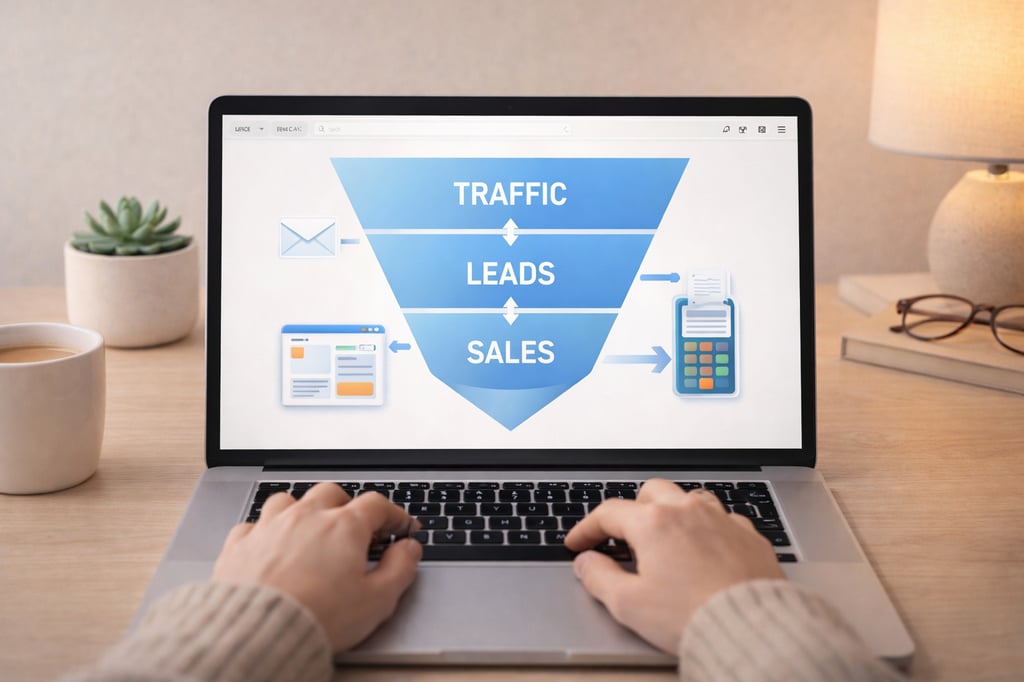

Introduction to Digital Product Funnels
A digital product funnel is a structured pathway that guides potential customers through various stages of the buying process, from initial awareness to final purchase. Understanding how these funnels operate is crucial for anyone looking to generate consistent online sales, particularly in today’s digital marketplace. A well-designed funnel not only enhances user experience but also optimizes conversion rates significantly.
The foundational concept of a digital product funnel can be broken down into several key stages: awareness, interest, desire, and action. Initially, at the awareness stage, potential customers are introduced to a product or service. This is typically achieved through various marketing channels such as social media, blogs, or paid advertising. The primary goal here is to capture attention and generate leads.
Once potential customers are aware of the product, they move into the interest stage. During this phase, they seek more information and evaluate whether the product meets their needs. Providing valuable content—such as informative articles or engaging videos—can help guide them further down the funnel. These resources address questions and highlight the benefits of the product, fostering a deeper connection.
The subsequent stage is desire, where the prospect begins to recognize the value of the product. This could involve showcasing testimonials or case studies that illustrate successful usage. It is essential at this stage to build trust and evoke emotions that resonate with the potential customer, ensuring they are excited about the prospect of making a purchase.
Ready to start creating your own digital products?
If you’re not sure what to create or how to write it, this beginner-friendly AI prompts guide gives you step-by-step ideas you can use immediately.
Finally, the action stage culminates in the purchase decision. Here, clear calls to action and easy navigation play vital roles in encouraging the customer to complete their transaction. By effectively understanding and implementing each stage of the digital product funnel, one can create a streamlined process that ultimately leads to daily sales, making it an invaluable strategy for any online business.
Understanding the Funnel Stages: Traffic, Lead Magnet, Email, Sale
A digital product funnel comprises several essential stages that guide potential customers towards making a purchase. Understanding these stages—Traffic, Lead Magnet, Email, and Sale—is crucial for building an effective funnel that can generate sales daily, especially for beginners. Each stage serves a specific purpose and contributes toward converting visitors into paying customers.
The first stage, Traffic, refers to the visitors your funnel attracts. This can be achieved through various channels such as social media, search engine optimization (SEO), or paid advertising. It is vital to understand your target audience and their behavior to effectively drive traffic to your funnel. For instance, if you sell digital marketing courses, sharing engaging content on platforms like Facebook and LinkedIn can attract the right audience.
Following Traffic, we have the Lead Magnet stage. Here, the goal is to entice visitors to provide their contact information, usually through an enticing offer such as a free eBook, checklist, or trial period. This incentive should align with the interests of your target audience. For example, you could create a free template for social media marketing strategies that will attract individuals interested in enhancing their online presence.
The third stage is Email, which involves nurturing leads through email marketing. After acquiring prospects' contact details, it is essential to maintain engagement through a series of automated emails. These emails should provide value, share useful content, and gently push towards the sale. Personalizing your emails based on customer behavior can significantly enhance conversion rates.
Finally, the Sale stage represents the actual transaction where leads become customers. It is crucial to create a seamless checkout process and instill trust through testimonials or guarantees. Crafting persuasive sales pages that clearly communicate the benefits of your product can further facilitate this transformation. By understanding and effectively managing each stage of the funnel, beginners can successfully implement a simple digital product funnel and generate consistent sales.
Generating Traffic to Your Funnel
Attracting targeted traffic to your digital product funnel is crucial for achieving consistent sales. Two primary methods exist to generate this traffic: organic and paid strategies. Each of these approaches offers unique benefits and can be tailored to suit the needs of beginners looking to get started without overwhelming complexity.
Organic traffic generation focuses on attracting visitors without direct financial investment. One effective method is leveraging content marketing. By creating high-quality, informative content tailored to your target audience, you can drive traffic to your funnel organically. Utilize platforms such as blogs, podcasts, and social media to share valuable information that piques the interest of potential customers. Search engine optimization (SEO) is another integral aspect; employing keywords relevant to your niche will enhance search visibility, directing more users to your funnel.
Utilizing social media platforms can also yield substantial traffic. Engaging with your audience through regular posts, stories, and interactive content can cultivate a community around your digital products. Facebook groups, Instagram, Twitter, and LinkedIn can act as effective channels for sharing valuable insights and encouraging discussion among potential leads. Participating in relevant online forums and communities, and providing useful advice, can further establish credibility while enhancing visibility.
On the other hand, paid traffic strategies can expedite the process of attracting visitors to your funnel. Platforms such as Google Ads and Facebook Ads enable targeting specific demographics to ensure your ads reach potential customers inclined to purchase your product. Investing in pay-per-click campaigns or social media promotions can yield immediate traffic, although it requires careful monitoring to maximize return on investment.
Combining these organic and paid methods can result in a well-rounded traffic generation strategy. Beginners should consider starting with organic approaches to build foundational knowledge and gradually integrate paid strategies as their confidence grows. By understanding how to effectively drive traffic, you enhance your digital product funnel's prospects for success.
Creating an Effective Lead Magnet
In the digital marketing landscape, a lead magnet is a pivotal tool used to convert site visitors into leads. An effective lead magnet offers substantial value to your target audience in exchange for their contact information, thereby facilitating the growth of your email list and fueling your sales funnel. The primary goal is to attract potential customers and establish their interest in your offerings.
There are various types of lead magnets that can resonate with your audience. Common formats include eBooks, whitepapers, checklists, templates, webinars, and free trials. Each type caters to different preferences and can be tailored to address your target audience's specific needs. For example, if your audience seeks knowledge and insights, an informative eBook or a detailed whitepaper can serve as an excellent lead magnet. Conversely, if your audience prefers actionable content, a checklist or a template might be more appealing.
While developing your lead magnet, it is crucial to focus on high-value offerings. This requires a deep understanding of your target audience's pain points and desires. Conducting surveys or analyzing existing customer interactions can reveal valuable insights into what potential leads value most. Ensure that your lead magnet resolves a specific problem or fulfills a critical need, which in turn increases the likelihood of conversion.
Furthermore, incorporating your lead magnet into your funnel should be seamless and strategic. It is beneficial to position your lead magnet prominently on your website and promote it through various channels, such as social media, blogs, and email marketing. By doing so, you create multiple touchpoints for engagement, making it easier for visitors to access the lead magnet. Ultimately, a well-crafted lead magnet can significantly enhance your funnel's effectiveness by nurturing leads and driving them closer to a purchasing decision.
Nurturing Leads through Email Marketing
Email marketing serves as a pivotal strategy in nurturing leads obtained from your lead magnet. It allows businesses to maintain ongoing communication with potential customers, ultimately leading them through the sales funnel towards conversion. Effective email marketing not only informs but also engages, thereby fostering a relationship conducive to sales.
To initiate this process, crafting a compelling welcome email is essential. This email serves as the first point of contact and should clearly express gratitude to the subscriber for opting in. It's an opportunity to introduce your brand and offer a preview of what they can expect from your emails, including insights, tips, and exclusive promotions. Ensuring that this initial communication is warm and welcoming sets a positive tone for future interactions.
Once the welcome email is dispatched, the next step involves developing an effective email sequence. This sequence should strategically educate and guide leads through the sales process. Incorporating a mix of informative content, such as how-to guides or industry insights, alongside promotional content will keep your audience engaged. The use of storytelling can be particularly effective; sharing success stories or testimonials not only humanizes your brand but also demonstrates the value of your offerings.
Moreover, segmenting your email list based on specific interests or behaviors can significantly enhance the relevance of your campaigns. Tailoring content to different segments ensures that your emails resonate with your audience and meet their individual needs. Utilizing automation tools can streamline this process, allowing you to send timely messages that align with user actions, such as abandoned carts or downloads of your lead magnet.
Ultimately, leveraging email marketing effectively can nurture your leads and guide them toward conversion. By providing consistent value and fostering strong relationships through tailored communication, you can transform leads into loyal customers, thereby achieving daily sales success.
The Sales Process: Turning Leads into Customers
The sales process is a critical component of any digital product funnel. It encompasses the strategies and techniques employed to convert leads, who have shown interest in your products or services, into paying customers. A well-optimized sales page is fundamental in this process, as it serves as the primary touchpoint for potential buyers. To enhance your sales page, ensure that it clearly articulates the value proposition of your product and addresses common pain points. By providing clear, persuasive copy accompanied by high-quality visuals, you can effectively engage visitors and encourage them to take action.
Additionally, incorporating elements of urgency and scarcity can significantly influence purchasing decisions. Urgency prompts leads to act quickly, while scarcity creates a fear of missing out. Implementing countdown timers for limited-time offers or displaying components such as "only a few left in stock" can motivate prospects to complete their purchases. These strategies not only stimulate immediate interest but also enhance the perceived value of your offerings.
Within the digital product funnel, introducing low-ticket products can further facilitate the conversion of leads into customers. These affordable products serve as an entry point, allowing potential buyers to experience the quality of your offerings without a significant financial commitment. Once they are satisfied with their initial purchase, they are more likely to invest in higher-ticket items. Therefore, strategically positioning low-ticket products within your funnel can drive initial sales and build trust, laying the groundwork for subsequent upsells.
In conclusion, optimizing your sales page, leveraging urgency and scarcity, and incorporating low-ticket products are essential strategies for effectively turning leads into customers within your digital product funnel. Through careful execution of these tactics, you can enhance your sales process and foster sustainable revenue growth.
Don’t wait months trying to figure this out.
Start creating and selling your digital product today using this step-by-step AI prompts guide